
Dental Careers in NB: DA vs DH Programs Explained
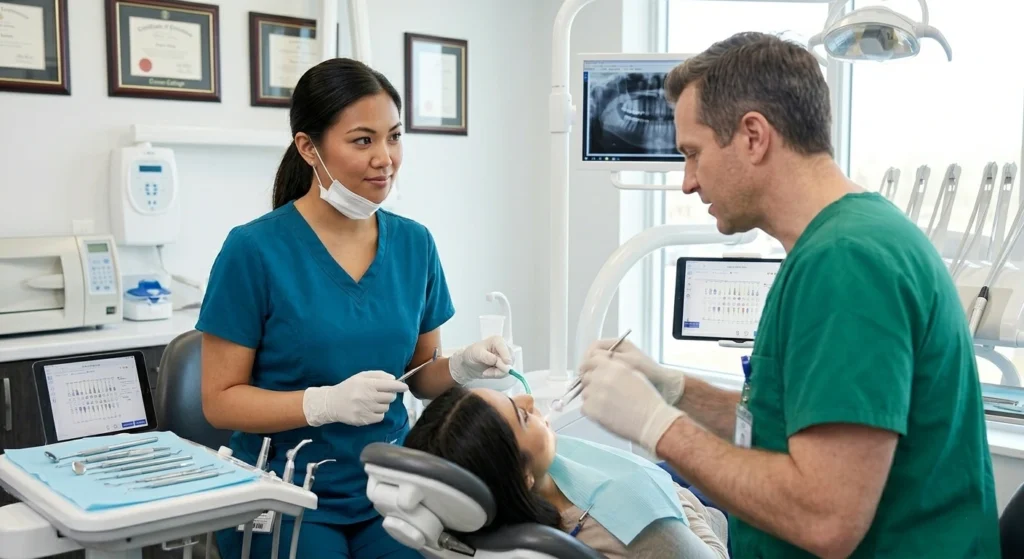
Are you looking to break into the growing healthcare sector but feel uncertain about which path to choose? The dental industry in New Brunswick is booming, presenting incredible stability, rewarding patient interactions, and rapid paths to graduation. If you have been researching your options, you have undoubtedly run into two major titles: Dental Assistant and Dental Hygienist.
At first glance, they might seem to do the same job. They both wear scrubs, work in oral health clinics, and make patients smile. However, underneath the surface, these two roles represent completely distinct career trajectories, educational timelines, daily tasks, and financial rewards.
Choosing between these paths is a pivotal decision that shapes your daily routine and long-term professional satisfaction. Let us dive deep into the differences, look closely at the educational training, examine the skill gaps, and explore how you can launch either career right here in New Brunswick.
Who Does What? The Daily Reality
To understand which career path fits your lifestyle, you need to look at what a typical day looks like for each professional. They operate as a tightly synchronized team, but their specific zones of responsibility are quite unique.
The Dynamic Role of a Dental Assistant
Think of a dental assistant as the ultimate orchestrator of the dental clinic. If you choose this path, you are the right-hand support to the dentist, ensuring that procedures run seamlessly and patients feel safe.
Your day is highly varied. You are responsible for welcoming patients, preparing the treatment rooms, sterilizing sophisticated instruments, and taking digital dental X-rays. During a procedure, you are right there alongside the dentist, handling suction, passing instruments, and mixing materials for fillings or impressions. You keep the office flowing efficiently, mixing clinical skills with administrative support.
The Independent Scope of a Dental Hygienist
If you step into the shoes of a dental hygienist, your focus shifts toward independent preventative oral care. Hygienists operate with a high degree of autonomy.
When a patient books a standard cleaning appointment, they spend the vast majority of their time exclusively with you. You will perform comprehensive oral health assessments, examine the gums for signs of periodontal disease, scrape away hard tartar deposits, apply fluoride treatments, and take diagnostic X-rays. Crucially, you serve as an educator, teaching patients the exact brushing and flossing techniques required to prevent future systemic health issues.
Dental Assisting vs Dental Hygiene Duties & Skills
The clinical and legal boundaries between these two positions create a significant skill gap. This division determines who is permitted to perform specific actions inside a patient’s mouth.
A dental assistant focus is primarily supportive and collaborative. In New Brunswick, certified assistants are trained in intra-oral skills like polishing teeth, applying topical anesthetics, taking impressions, and placing rubber dams. However, their tasks are fundamentally designed to prepare a patient for the dentist or finish up a treatment.
A dental hygienist scope of practice is therapeutic and diagnostic. Hygienists use specialized hand scales and ultrasonic instruments. They formulate distinct dental hygiene diagnostic plans and can even administer local anesthesia in many jurisdictions. The depth of clinical judgment required to treat periodontal diseases means their training requires a much deeper dive into anatomy, pathology, and pharmacology.
The Training Advantage at Oulton College
No matter which path calls to you, finding both programs at Oulton College gives you a premier competitive edge. Located in Moncton, Oulton College has established an exceptional reputation for producing top-tier dental professionals through immersive, hands-on learning environments.
The college features a state-of-the-art, fully functioning on-campus dental clinic. This allows students to transition smoothly from textbook theory to treating real patients under direct professional supervision.
Choosing an institution that houses both programs creates a powerful collaborative ecosystem. Dental assisting and dental hygiene students regularly train alongside one another, simulating the exact team dynamics found in private practices, community health centers, and hospital clinics. By the time you graduate, you already know how to communicate efficiently across professional boundaries, making you highly employable from day one.
Understanding Credentials and Program Timelines
The depth of the curriculum naturally impacts how long you will study before entering the workforce.
- Dental Assisting Pathway: This is an intensive 10-month diploma program. It is designed for focused individuals who want to fast-track their education and enter the workforce in under a year. Graduates qualify to challenge the National Dental Assisting Examining Board exam to earn their formal certification.
- Dental Hygiene Pathway: This is an accelerated, rigorous diploma program that spans three years of comprehensive medical and clinical study. The extended timeline is necessary to master advanced biomedical sciences, clinical therapy, and community health strategies. Graduates are eligible to write the National Dental Certification Exam to secure their registered status.

Let us Talk Numbers: Salary Difference in NB
Because the educational requirements and clinical responsibilities differ so much, there is a noticeable difference in compensation between these two roles.
According to data published by the Government of Canada Job Bank, the salaries for dental assistant professionals in New Brunswick generally range between $22.00 per hour and $30.00 per hour (Source: Job Bank market report). This provides a reliable, steady income right out of the gate for under a year of post-secondary study.
On the flip side, the Job Bank reports that professionals specializing in Dental Hygiene in NB command a higher premium due to their advanced diagnostic credentials. Hygienists in the province typically earn between $35.58 per hour and $46.00 per hour (Source: Job Bank market report). In busy urban hubs like Moncton, specialized hourly rates can even reach higher depending on the specific dental group and benefits package
Long-Term Career Growth
Both paths offer excellent long-term career stability, but the directions of growth look slightly different.
For a dental assistant in NB, growth often looks like branching out into specialized dental practices, such as orthodontics, oral surgery, or pediatric dentistry. Many experienced assistants transition into lucrative dental office management roles, clinical coordination, dental supply sales, or even become instructors at private career colleges.
For a dental hygienist, career advancement can lead to corporate dental consulting, public health policy advocacy, research positions, or teaching roles within university faculty departments. Furthermore, with the rise of independent dental hygiene clinics across Canada, there are growing entrepreneurial opportunities for hygienists to establish their own mobile or brick-and-mortar preventative care clinics.
Which Path Is Right for You?
Making the final choice comes down to assessing your personal career goals, your preferred timeline, and your natural strengths.
Choose Dental Assisting if:
- You want to complete your studies quickly and enter the workplace in ten months.
- You enjoy a fast-paced environment where you tackle a massive variety of changing tasks every single hour.
- You love collaborating closely as a supportive partner to a primary provider.
Choose Dental Hygiene if:
- You are deeply fascinated by the biological sciences, pathology, and independent clinical treatment.
- You want to work autonomously with your own dedicated roster of patients.
- You are looking to maximize your earning potential and do not mind investing multiple years into rigorous academic preparation.
Your Ideal Path to a Brighter Dental Career
The absolute best part about exploring dental assistant jobs or exploring advanced options for Dental Hygiene in NB is that there is no wrong choice. Both career choices drop you into a high-demand, stable, and profoundly rewarding healthcare sector where you can change lives one smile at a time. The choice relies entirely on how fast you want to start, your clinical independence preferences, and your long-term income goals.
What if you are still completely torn between the two options? You do not necessarily have to pick just one right now.
There is a pathway that allows you to complete the DA program first,, and then transition to complete the DH portion. Read about this pathway in the Smile Bright with Oulton College blog article.
Ready to transform your ambition into a real, tangible professional future? Visit the Oulton College program pages to learn about admissions criteria, start dates, and campus tour opportunities.

Your New Career is Waiting.
Explore the Dental Assisting and Dental Hygiene Program at Oulton College today.
Read our step-by-step guide on how to transition from a DA to a DH career seamlessly!
Is a dental assistant in NB required to be registered to practice?
Why are the salaries for dental assistant professionals lower than dental hygienists?
The pay difference reflects the variance in educational length, legal liability, and clinical independence. Hygienists invest more time in school to perform complex, independent diagnostic procedures, which commands a higher billing rate.
Can I transition easily from dental assisting to a dental hygiene program later?
Absolutely. Completing a dental assisting program provides an excellent foundational understanding of dental terminology, dental X-rays, and clinical safety, making you an outstanding candidate if you choose to apply for a dental hygiene diploma later. Read more about the transition in our Smile Bright with Oulton College blog article. Speak to a Admissions Advisor for more information, and to answer any questions you have.
*Please note that information may be subject to modifications. We encourage current and prospective students to visit the websites and speak to Admissions Advisors, in order to obtain the most recent information.