Hybrid PCP Program
Pursue Your Paramedic Career from Anywhere in the Maritimes
The demand for skilled paramedics has never been higher, yet for many aspiring medics, the “where” and “how” of education are the biggest roadblocks. Maybe you live in a rural community in Cape Breton, or perhaps you are balancing a family in PEI and can’t commit to a daily commute to Moncton. The traditional classroom model doesn’t always fit the reality of life in Atlantic Canada.
The good news? You don’t have to choose between your current life and your future career. Oulton College has introduced a Hybrid Primary Care Paramedic program designed specifically to bridge that gap. In this article, you will learn how this innovative model works, why it is the perfect solution for non-local students, and how you can help solve the critical paramedic shortage in our region.
The Atlantic Canada Paramedic Shortage:
It is no secret that New Brunswick, Nova Scotia, and Prince Edward Island are facing a significant shortage of paramedics. High call volumes and an aging population have created a massive demand for new recruits. Recent reports suggest that across the Maritimes, hundreds of positions remain vacant, leading to increased pressure on current crews.
Choosing to become a Hybrid PCP means entering a field with incredible job security. The future outlook for this profession is robust; health authorities across the Atlantic provinces are actively recruiting and often offering incentives for new graduates. By choosing the PCP New Brunswick path at Oulton College, you aren’t just getting a diploma; you are answering a call to action for your community.
The shortage isn’t just a headline; it’s a measurable gap. New Brunswick alone has recently faced a deficit of approximately 200 frontline staff, and national projections suggest this ‘strong risk of shortage’ will persist through 2033.
What is the Hybrid Primary Care Paramedic Program?
The Hybrid PCP program at Oulton College is a “best of both worlds” approach to medical education. It combines the flexibility of online learning with the rigorous, hands-on training required for emergency medicine.
Synchronous Online Learning
Unlike some correspondence courses where you are left to learn on your own, this program utilizes synchronous delivery. This means you attend live, staff-led lectures in real-time. You are part of a digital classroom where you can ask questions and engage with instructors just like you would on campus.
In-Person Intensive Blocks
Paramedicine is a physical job, and you cannot learn to save a life solely through a screen. To ensure you are field-ready, students travel to the Moncton campus for specific in-person “lab weeks”. During Term 1 and Term 2, you will attend campus during weeks 5, 10, 15, 20, and 21 to master your clinical skills.
A Look at Your Future Schedule
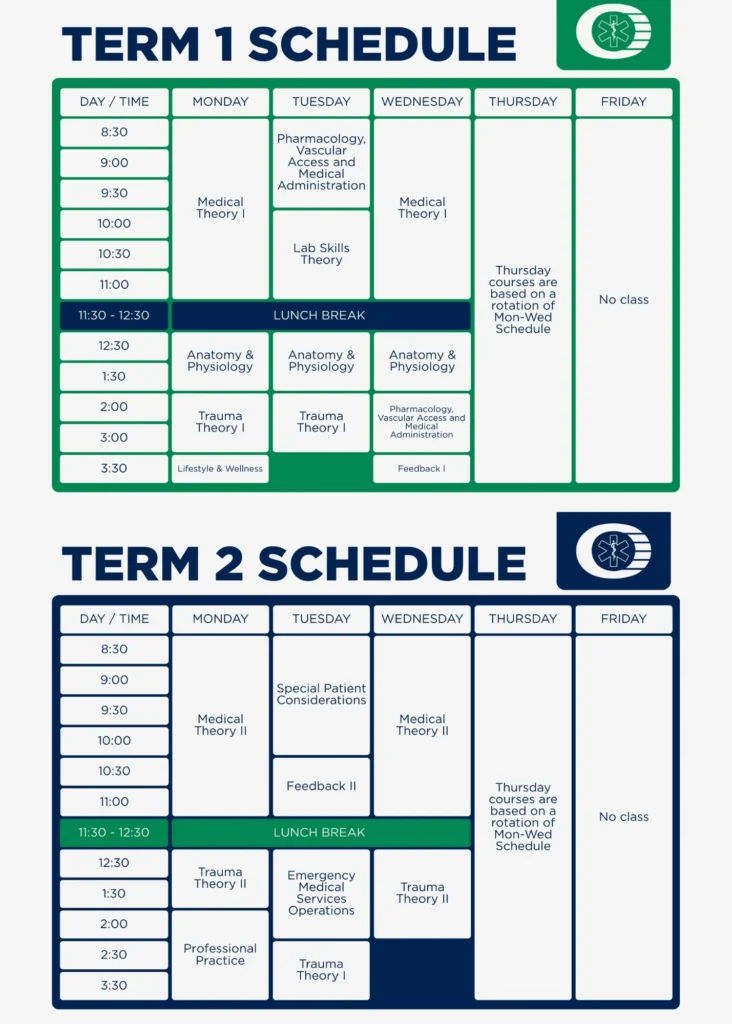
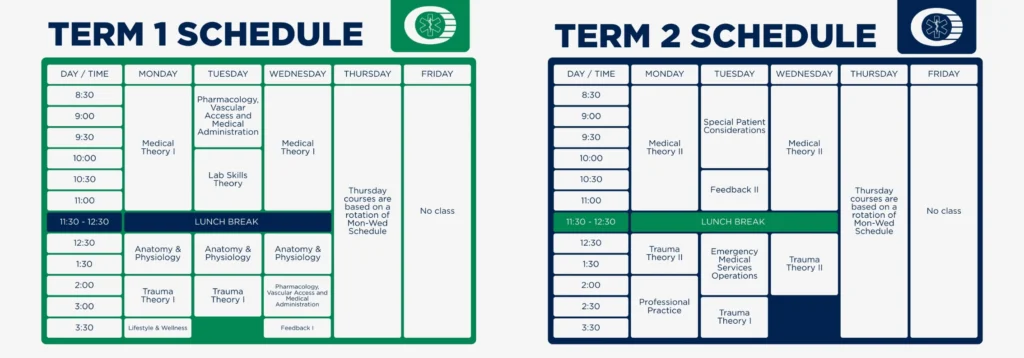
One of the most common questions students ask is, “What does a typical week look like?” The Hybrid Primary Care Paramedic schedule is structured to keep you engaged while providing a predictable routine.
Term 1 and Term 2 Breakdown
The schedule is built on a Monday through Thursday rotation, with Fridays off during online weeks.
- Mondays & Wednesdays: These are regular class days focusing on heavy-hitters like Medical Theory and Anatomy & Physiology.
- Tuesdays: You’ll dive into specialized topics such as Pharmacology, Vascular Access, and Medication Administration.
- Thursdays (Rotating): This day keeps things fresh by repeating the content from earlier in the week. For example, Week 1 repeats Monday classes, while Week 3 repeats Wednesday courses.
Why the Hybrid Model is a Game-Changer for Rural Students
If you live outside of Moncton, the hybrid model is likely the answer to your prayers. Here are the primary benefits for non-local students:
- Reduced Relocation Costs: You don’t need to sign a year-long lease in Moncton. You only need short-term accommodations during your five scheduled in-person weeks.
- Local Placements: Oulton College can accommodate preceptorships and clinical placements across New Brunswick, Nova Scotia, and Prince Edward Island. This means you can often complete your field training right in your home community.
- Self-Discipline and Growth: Success in an online environment requires a high level of independent discipline. Employers value graduates who have proven they can manage their time and remain engaged in a remote setting.
Is the Hybrid PCP Program Right for You?
While the flexibility is amazing, this program is just as rigorous as the traditional on-campus version. To succeed, you should consider the following:
- Tech-Savvy Skills: You need to be “mildly technologically savvy” to navigate the online platforms effectively.
- Reliable Connectivity: A stable internet connection and a high-quality device are non-negotiable for attending live lectures without interruption.
- A Dedicated Space: You need a quiet area where you can concentrate and participate fully in live discussions.
- Attendance Standards: Even though you are at home, you are held to the same strict attendance standards as in-person students. Lectures are not recorded for later viewing; you must be present and ready to go.
From Theory to the Field: Orientation and Training
Before you dive into your online modules, the journey begins with an in-person Orientation and Medical First Responder (MFR) training. This takes place at the Flanders campus in Moncton and serves as the foundation for your bond with your instructors and classmates. This initial face-to-face time is crucial for building the trust and communication skills necessary for a career in EMS.
Start Your Journey
The world of emergency medicine is waiting for you. By choosing the Hybrid Primary Care Paramedic program at Oulton College, you are choosing a path that respects your time and location without compromising on the quality of your education. You will gain the skills to handle trauma, manage pharmacology, and provide life-saving interventions, all while staying connected to your roots in Atlantic Canada.
The shortage of paramedics in our region is a challenge, but it is also an opportunity for you to step up and make a difference.
Remember that by investing in your education, you are investing in your future, gaining the skills and connections you need to thrive in your career and life.
Frequently asked questions:
Is the Hybrid PCP program easier than the in-person version?
Do I have to live in Moncton for the Hybrid program?
Can I do my paramedic placements in Nova Scotia or PEI?
*Please note that information may be subject to modifications. We encourage current and prospective students to visit the websites and contact your admissions advisor in order to obtain the most recent information.