
Launch Your Policing Career NB: Your Oulton College Roadmap
Ready to Trade the Desk Job for a Life of Purpose?
Have you ever felt the pull toward something more? A job that challenges you, makes a tangible difference in your community, and offers genuine pride in your work?
For many, the answer lies in public safety. A policing career in NB (New Brunswick) or a vital role in corrections offers a chance to be the steady hand, the calm voice, and the dedicated professional who keeps our communities safe.
The journey can seem daunting. Where do you start? What training do you really need? And who can provide the practical, job-ready skills that employers are looking for right now?
If these questions are swirling in your mind, stop searching. This article is your step-by-step guide. We’ll break down the process of starting your career in policing and corrections, and show you exactly how the Oulton PCF (Policing & Corrections Foundation) diploma can be your fast track to a fulfilling and stable career.
Why Choose a Career in Public Safety Right Now?
Before diving into the “how,” let’s talk about the “why.” A career in public safety is more than just a job; it’s a commitment to service that comes with significant benefits:
- Stability and Growth: Public safety services are essential and often offer excellent benefits, pensions, and job security, especially in New Brunswick.
- Variety: No two days are the same. You might be responding to an emergency, engaging in community outreach, or conducting crucial investigative work.
- Impact: You become a positive force in people’s lives, often during their most vulnerable moments.

The demand for qualified professionals is steady, which means the time is right to invest in a quality corrections diploma or policing foundation program.
Step 1: Mapping Your Path and Choosing Your Focus
The term “public safety” covers a broad range of roles. Your first step is to decide which area calls to you most.
The Difference Between Policing and Corrections?
While both are crucial, they focus on different parts of the justice system:
Policing (Law Enforcement): Focuses on community protection, crime prevention, emergency response, and investigation. This includes municipal police, RCMP, and specialized units. A solid foundation helps prepare you for the competitive entry process into these services.
Corrections: Focuses on the security, supervision, and rehabilitation of individuals in correctional facilities (jails and prisons). This is a highly professional field that requires excellent communication, conflict resolution, and de-escalation skills. Earning a specialized corrections diploma is often a direct path to employment in this sector.
Deciding on a focus will help you choose the right training program. If you want a flexible foundation that opens doors to both, look for a comprehensive program.
Step 2: Getting the Right Education
You can’t jump into a policing career NB without foundational knowledge and skills. This is where your educational partner becomes critical.
The Oulton College Policing & Corrections Foundation (PCF) Diploma
To successfully enter this field, you need training that is:
- Relevant: Covers the real-world skills and legal knowledge you’ll use daily.
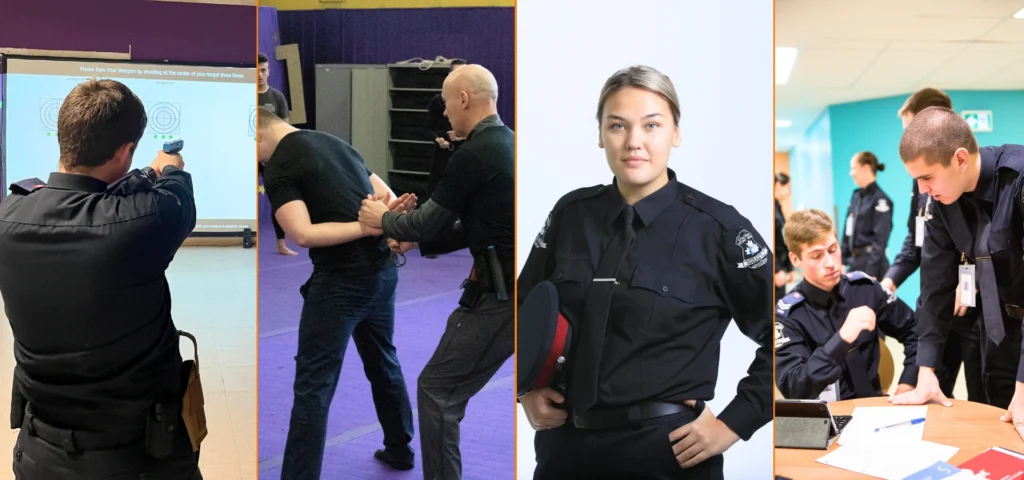
- Practical: Provides hands-on training, not just theory.
- Recognized: Offers a credential that employers respect.
This is precisely what the Oulton PCF program offers. It’s designed to provide a comprehensive, accelerated education that meets the needs of employers in New Brunswick and across Canada.
Key Areas of Study in the PCF Program:
- Law and Legislation: Learning the Canadian legal system, including the Criminal Code of Canada and provincial legislation.
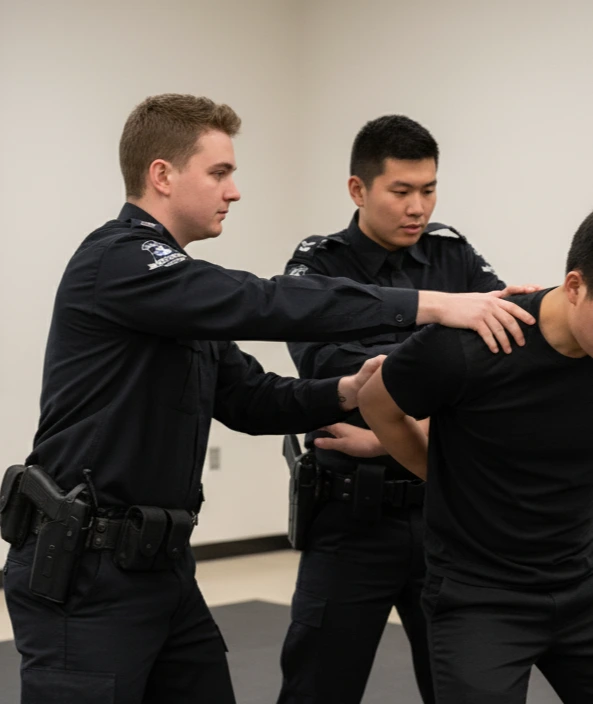
- Safety and Response: Training in critical skills like non-violent crisis intervention (NVCI), defensive tactics, and first aid/CPR.
- Communication: Developing strong report writing, interviewing, and de-escalation techniques.
- Investigations and Procedures: Understanding evidence collection and standard operational procedures for police and correctional environments.
By completing the Oulton PCF diploma, you equip yourself with a versatile foundation, significantly boosting your resume whether you are applying for a peace officer role, security, or taking the next steps toward a police academy.
Step 3: Mastering the Essential Soft Skills
A badge and a uniform are only part of the job. In public safety, your most valuable tools are your character and communication skills. These are not just “nice to haves” but non-negotiable requirements for success.
The Top Skills Hiring Managers Look For:
- Emotional Intelligence: The ability to understand and manage your own emotions, and to recognize and influence the emotions of others. This is vital in de-escalation.
- Integrity and Ethics: Public trust is paramount. Maintaining the highest standards of honesty and professionalism is non-negotiable.
- Conflict Resolution: The capacity to handle volatile situations calmly and professionally, seeking to resolve conflicts peacefully.
- Physical and Mental Resilience: The work is demanding. You must be prepared to handle stressful situations and maintain your physical well-being.
A good corrections diploma program, like the one at Oulton College, integrates the development of these soft skills directly into the curriculum, preparing you not just to know the job, but to do the job with confidence and competence.
Step 4: The Application Process for Future Employment
Once you have your Oulton PCF diploma, you are ready to enter the highly competitive world of public safety applications. Your diploma serves as the strong foundation, but you need to excel in the next stages.
Tips for Securing Your Role:
Police: You will typically apply to a force (RCMP, municipal police, etc.) and complete a lengthy process involving entrance exams, physical fitness tests (like the POPAT), polygraph exams, psychological assessments, and panel interviews. Your Oulton training gives you the knowledge required for the written and physical exam portions.
Corrections/Security: Applications for roles like correctional officers or secondary peace officers are often more direct. Highlight the specific skills learned in your corrections diploma, such as security procedures, NVCI certification, and interpersonal communication.
The Power of Practical Experience
Many successful Oulton PCF students use their educational background to secure excellent co-op placements or entry-level positions in security or border services. This practical experience is incredibly valuable and often leads directly to permanent employment or a major advantage when applying to a police academy.
Your Foundation for a Public Safety Career Starts Here
Starting a career in policing or corrections is not a decision to take lightly, but it is one of the most rewarding commitments you can make. The process is clear:
Commit to a life of service and impact.
Enroll in a recognized and practical program, such as the Oulton PCF diploma.
Master the foundational knowledge, laws, and critical soft skills.
Apply your training to secure a role and begin your service.
The journey to a stable and meaningful policing career in NB or a vital role in corrections is waiting. With the right training, integrity, and determination, you can make it happen.
Are you ready to stop dreaming about a meaningful career and start building one?
Book an Admissions Meeting Today! 🗓️
Shape Your Future in Law Enforcement with Oulton College!
Remember that by investing in your education, you are investing in your future, gaining the skills and connections you need to thrive in your career and life.
What are the main advantages of getting an Oulton College Policing & Corrections Foundation (PCF) diploma?
The Oulton PCF diploma provides a job-ready foundation. Covering essential legal knowledge, practical skills, and report writing, making graduates highly competitive for roles in corrections, security, and as a prerequisite for many police academy applications in the policing career NB landscape.
Do I need a full degree to start a corrections career, or is a corrections diploma enough?
Correctional officer positions normally require a high school diploma and specialized post-secondary training, such as the corrections diploma from Oulton College.
What specific requirements are there for starting a policing career NB (New Brunswick)?
Requirements vary between the RCMP and municipal forces, but typically include: being a Canadian citizen or permanent resident, having a valid driver’s license, no serious criminal record, meeting visual and hearing standards, and passing a physical fitness test (POPAT). A recognized post-secondary credential, like the Oulton PCF diploma, is highly recommended in the competitive selection process.
*Please note that information may be subject to modifications. We encourage current and prospective students to visit the websites and speak to Admissions Advisors, in order to obtain the most recent information.